Saturday, February 18, 2012

Picking a Genre

Earlier in the week I posted how it seems that many more writing oriented websites are written by women than men. Trolling around the writing blogoverse I've also noticed that there seems to be a heck of a lot of writers who call their work "young adult". This got me thinking about a few posts I've read recently that discuss what constitutes young adult fiction, including a post by our friends at BookEnds, LLC.

Check out the Genre Map at Book Country
Personally, I've always thought that what defines a genre is composed of two parts, what you're writing and who you're writing it for. Young adult happens to be one of the genres that's defined mostly by target audience. It's true that the protagonists are usually under 20 y.o. but there are plenty of works outside the genre that fit that criterion. That's quite a bit different than science fiction or fantasy which are defined almost entirely by certain plot elements. Then there are the huge anomalous genres like "commercial fiction" which seems to be made of any book that has a chance of selling to a broad audience base.

I call the manuscript I'm currently working on "fantasy". That seems easy enough but then there are at least 12 sub-genres that many agents use to specify what kind of fantasy manuscripts they're interested in. Mine isn't urban fantasy (having classic fantasy plot elements and characters but set in an actual modern setting) or dark fantasy (just like it sounds) but instead probably falls into the realm of epic fantasy (aka high fantasy), which is cool but is also sound just a little pompous if you ask me.

What do you call your story?

Thursday, February 16, 2012

Tuesday, February 14, 2012

Sex Bias in Reading

In putting together this blog I got to thinking about who my favorite authors are. I love fantasy so it's no surprise that names like Anne McCaffrey, Melanie Rawn, and C.S. Friedman come to mind. I also love classic literature including works by Betty Smith and Jane Austen. And when you scan by bookshelf for books centered around my chosen profession in the natural sciences you'll find names like Rachel Carson, Jane Goodall, and Temple Grandin. Picking up on a theme yet?

It turns out, all things being equal I tend to gravitate toward female authors. I have no idea why this is. I don't actively seek out women writers nor do I avoid their male counterparts. I certainly don't scan the shelves at the book store looking for feminine names. Oddly enough, I didn't even know C.S. Friedman (author of The Coldfire Trilogy) was a woman until partway through the 3rd book! Even the blogs that I have listed here are (at this point) all written by women. To have such a noticeable skew to a sex ratio seems kinda strange. But what can I say...I love the ladies.

How about you? Have you noticed any gender preference in your reading?

Friday, February 10, 2012

Oregon Wildlife Society Conference

I just got back from 3 days of talks and presentations at the Oregon Chapter of The Wildlife Society annual meeting held on the Oregon coast. There were some very interesting talks this year and I learned a ton. While I was there, I realized that this was my 5th or 6th professional conference but that I've never been to a writing conference. At professional conferences there are always a few big names that always have a crowd around them. College undergrads pester them for advice and clamor for face time with someone who could potentially make or break their career. I imagine that at a writing conference I would take the role of an attention starved undergrad, hoping an established author or agent might throw me a crumb!

Tuesday, February 7, 2012

Happy Birthday Mr. Charles Dickens


After almost two years of inactivity I’m dusting off this old blog to give it another try. Why? Apparently, if you want to be a published writer you need to have a blog. So here we go!

And what better way to start a revamped writing blog than on the 200th birthday of Mr. Charles Dickens. Born on this day in 1812, Dickens is one of the most beloved writers in history. His best known work, A Christmas Carol, has probably been redone, remade, and re-envisioned more than any other story this side of Shakespeare. To create something so beloved, that continues to move people nearly two centuries later, it’s what every writer dreams of.

“It is a far, far better thing that I do, than I have ever done; it is a far, far better rest that I go to, than I have ever known. “ 
-Charles Dickens, A Tale of Two Cities

Thursday, January 22, 2009

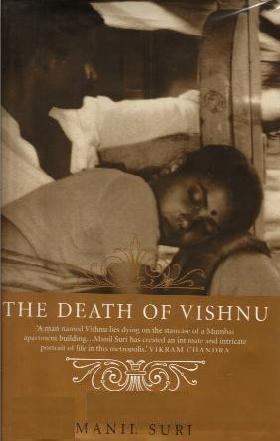
Book Review: The Death of Vishnu: A Novel, by Manil Suri

The book is centered on a small group of people, one of which, a drunkard named Vishnu, is dying. Weaving its way in and out of the lives of those that live, love, and die within it, the story takes place almost exclusively in a single apartment building in Mumbai, India. It's a book that lacks a variety of settings, or even a defined plot for that matter. What it does have are snapshots. Snapshots of each character that give you a brief glimpse into their present; and with each snapshot a caption in the form of memories from the past that give the stories and characters feeling, depth, and meaning. As the reader you are shown the paths the characters have walked and then are allowed to briefly walk beside them. As you do you can see the path ahead split into all the different, interweaving tracks each character could take. Good stories, after all, are about character development. But in this good story, these good stories, the characters stay on their respective paths, not for a lack of story, but because that's what people do. You think that because the headstrong young woman gets a taste of the real world, perhaps she will shed some of her naivety. You hope that since they have let a man die on their doorsteps, the neighbors might abandon their pettiness. As you read you try to will the characters to a different, higher path; but that's not how life works. And that's what this book is, a book about life, snapshots about life, capturing only a few moments in time. But like the Hindu mythology that permeates the lives of the characters, their stories don't end just because the book does. The various story lines, all woven together, don't tie off neatly in the end. Rather than leaving you feeling empty and frustrated, like some books which a lack a clear resolution, you accept that there is no end. As in reincarnation, the end only represents a link in the infinite chain of creation. So it is with this book.

Thursday, November 27, 2008

Monster Semantics

According to ancient Greek mythology a ferocious three-headed dog named Cerberus guarded the gates of the underworld and kept the dead from rejoining the living.

I’ve got issues with that.

Not with the concept; an awesome monster-dog at the gates is much more entertaining than an old bouncer that looks like Santa in a bath robe checking names against the naughty/nice list to see who can get into heaven. Mine is an issue with semantics.

I have a friend who’s expecting (or more accurately his girlfriend is expecting) and he thinks that based on the size of her belly that they will be having twins. Let’s say he’s right and in 7 months she gives birth to two normal healthy twins. Wonderful! As my wife and I have always wanted two kids, I for one have always thought that having twins on the first go would be great; get it all over at once. Plus I could get my tubes tied while she’s giving birth (to save gas).

Now, let’s say that by some crazy chance (1 in about 125,000 births according to Wikipedia) she gives birth to conjoined twins. Don’t freak out, I’m not jinxing my friend’s girlfriend’s pregnancy. I threw salt over my shoulder as I wrote it.
In this unlikely event, two babies would still be the end result, they might just be linked at the hip or back or whatever. My point is that conjoined twins are still two individuals; you would never say that they were one individual with two heads.
So why was Cerberus a three-headed dog? If each head is an individual, wouldn’t it be more accurate to say that he (or she?) was a one-bodied pack of dogs? The same would go for any of the multi-individual single-bodied monsters that riddle mythologies, fairy tales, and B-horror movies.
Regardless of what fiction they reside in, these are fearsome beasts! Let’s give them the respect they deserve and use proper mythological nomenclature when discussing them.
Thanks for reading.